Hello Pre-k School Sublimation: A Designer’s Review
As a designer who spends more time staring at stitch maps than I care to admit, I have learned that not every digital file translates well into thread. We often see beautiful vector art labeled as ready for production, but the jump from screen to fabric is where the real challenges lie. Recently, I evaluated Hello Pre-k School Sublimation, a digital asset marketed primarily for cutting machines and sublimation printing. While the product description highlights its utility for Cricut and Silhouette users, my interest lay in how this graphic holds up when adapted for embroidery projects. For craft business owners and Etsy sellers looking to expand their product lines, understanding the nuance between a cut file and a stitched design is crucial.
First Impressions and Visual Personality
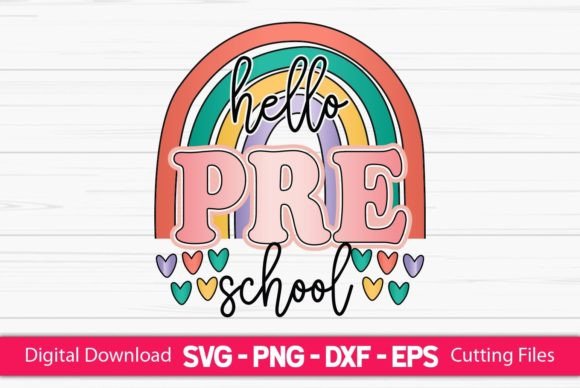
The first thing that strikes you about Hello Pre-k School Sublimation is its cheerful, approachable aesthetic. The typography and layout scream "early education," evoking a sense of warmth and nostalgia associated with kindergarten classrooms and first-day-of-school photos. The mood is playful yet structured, which is exactly what parents and teachers look for in back-to-season merchandise. From a graphical standpoint, the lines are clean, and the shapes are distinct. This clarity is vital because it suggests that the design has enough negative space to breathe once converted into stitches.
However, as an embroidery professional, I immediately look for potential pitfalls. Sublimation files are typically high-resolution raster images or complex vectors designed for ink absorption, not needle penetration. When I visualize this design on fabric, I am thinking about how those smooth gradients or sharp edges will translate into satin stitches or fill stitches. The visual personality is strong, but it requires careful handling to maintain its charm without becoming a dense block of thread.
Real-World Application: The Custom Tote Bag Scenario
To test the viability of this design, I imagined a common real-life scenario: creating a custom embroidered tote bag for a preschool teacher appreciation gift. Tote bags are a staple for handmade product sellers because they offer a large, flat canvas. If I were to adapt Hello Pre-k School Sublimation for this project, I would likely simplify the finer details. The goal is to create a personalized gift that feels premium, not cluttered.
In this context, the design works best as a central focal point. I would recommend using a heavy-weight cotton canvas to support the stitching. The playful theme fits perfectly with the utilitarian nature of a tote, bridging the gap between functional craft business items and sentimental keepsakes. For an Etsy seller, this application opens doors to bulk orders from school districts or parent-teacher associations, provided the final stitched result looks professional and durable.
Fabric Considerations and Stitching Clarity
One of the most critical aspects of using a file like Hello Pre-k School Sublimation is understanding fabric texture. This design, with its likely bold lettering and graphic elements, performs best on stable, medium-to-heavy weight fabrics. Think sweatshirt embroidery on a high-quality fleece hoodie or a structured apron. These materials provide the necessary stability for the hoop size and prevent the fabric from puckering under the tension of the machine.
Conversely, you must exercise caution with stretchy fabrics or thin materials. If you attempt to stitch this directly onto a lightweight t-shirt without proper stabilization, the design may distort. The stitch density required to cover the graphic areas could pull the fabric, ruining the clean lines that make the design appealing. For baby embroidery projects, such as onesies or bibs, I would strongly advise using a cut-out applique design technique rather than a full fill stitch. This reduces the amount of thread on the garment, keeping it soft against sensitive skin while still capturing the essence of the original graphic.
Navigating Curved Surfaces and Small Details
Another area where designers must be meticulous is curved surfaces, such as caps or hats. While Hello Pre-k School Sublimation is charming, its horizontal layout might not conform well to the curved panel of a baseball cap without significant distortion. If you are determined to use it on headwear, consider breaking the design into smaller elements or resizing it significantly to fit the available hoop size. Tiny lettering can easily become illegible if the stitch count is too high for the scale. Always check whether the design works for both personal and commercial projects on these difficult substrates before committing to a full production run.
Enhancing Product Value and Brand Consistency
For small shop owners, the perceived value of a finished product is heavily influenced by the quality of the embroidery. A well-executed version of Hello Pre-k School Sublimation can elevate a simple item into a boutique product. When customers see clean satin stitch borders and uniform fill stitches, it builds trust. It signals that the maker cares about durability and presentation. This attention to detail is what drives buyer engagement and repeat business in the competitive world of online crafts.
Moreover, using consistent design assets across your product line helps with brand recognition. If your shop specializes in educational or children’s themes, incorporating this graphic into various items—such as pillow covers, tea towels, or holiday embroidery gifts—creates a cohesive collection. It allows you to market a lifestyle, not just a single item. Whether you are creating printable mockups for your online store or producing physical inventory for craft fairs, the versatility of this graphic, when properly adapted, supports a professional brand image.
Practical Notes for the Embroidery Designer
Before you load this file into your machine, there are several practical steps you must take. Since Hello Pre-k School Sublimation is described as an SVG, PNG, DXF, and EPS file for cutting machines, it is not inherently an embroidery file. You will need to use digitizing software to convert the graphic into a stitch file. Here is my checklist for ensuring success:
- Test on Scrap Fabric: Always run a test stitch-out on the same type of fabric you intend to use for the final product. This helps you identify any issues with thread breaks or nesting.
- Check Thread Color Contrast: Ensure your thread colors stand out against the fabric background. High contrast improves readability, especially for text-based designs.
- Review Stitch Density: Adjust the density in your digitizing software. Too dense, and the fabric will pucker; too sparse, and the backing will show through.
- Confirm Hoop Size: Make sure the design fits within your machine’s maximum hoop size. If it is too large, you may need to split the design or resize it, which could affect legibility.
- Inspect Small Details: Zoom in on the digitized version to ensure that tiny elements are not too small to stitch accurately. Simplify if necessary.
- Use Proper Stabilizer: Choose the right stabilizer for your fabric. Cut-away stabilizer is often best for stretchy fabrics, while tear-away works well for woven materials.
- Verify Licensing: Before selling finished items or digital products, confirm the licensing terms. Ensure you have the right to use the graphic for commercial embroidery projects.
Final Thoughts on Commercial Viability
In conclusion, Hello Pre-k School Sublimation offers a solid foundation for creative entrepreneurs looking to tap into the back-to-school market. While it is marketed towards sublimation and cutting machine users, its clean lines and engaging theme make it a viable candidate for embroidery adaptation. The key lies in the translation process. By respecting the limitations of thread and fabric, and by applying professional digitizing techniques, you can transform this graphic into a high-quality machine embroidery design.
For the handmade product creator, this means doing the homework upfront. Do not assume a cut file is ready for the needle. Take the time to adjust stitch types, manage density, and select appropriate materials. When done correctly, this design can become a bestseller in your small shop product lineup, appealing to parents, teachers, and anyone who appreciates the charm of early education aesthetics. It is a reminder that in the world of Crafts and Graphics, the magic happens not just in the download, but in the thoughtful execution of the final stitched piece.